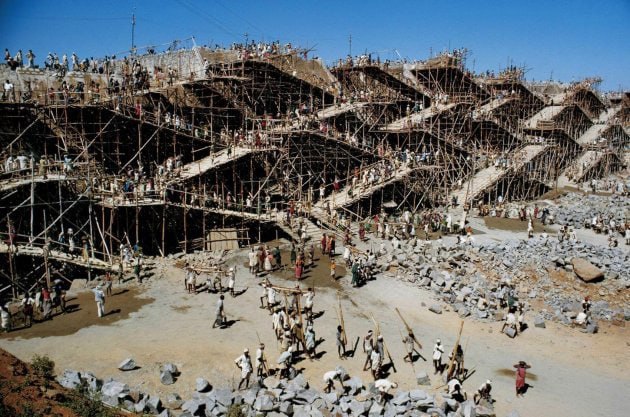
The Nagarjuna Sagar Dam is indeed an iconic engineering marvel and a significant milestone in India's development. Here are some interesting facts about the dam:
Key Facts
1. *Location*: The dam is situated on the Krishna River in the Nalgonda district of Telangana, India.
2. *Construction*: The construction of the dam began in 1955 and was completed in 1967, taking around 12 years to finish.
3. *Height and Length*: The dam stands at a height of 124 meters (407 feet) and has a length of 1,550 meters (5,085 feet).
4. *Irrigation*: The dam provides irrigation water to several large areas in India, including the states of Telangana, Andhra Pradesh, and Karnataka.
5. *Hydroelectric Power*: The dam also generates hydroelectric power, with an installed capacity of 815.6 MW.
Impact
The Nagarjuna Sagar Dam has had a significant impact on the region's agriculture, economy, and environment. Some of the benefits include:
1. *Increased Agricultural Production*: The dam has enabled the irrigation of millions of acres of land, leading to increased agricultural production and food security.
2. *Economic Growth*: The dam has contributed to the economic growth of the region by providing employment opportunities and stimulating industrial development.
3. *Flood Control*: The dam has helped to control flooding in the region, protecting crops and villages from damage.
Overall, the Nagarjuna Sagar Dam is an impressive example of India's engineering prowess and its commitment to developing its infrastructure for the benefit of its people.