Chittaranjan is a unique, planned industrial township and railway colony located in the Paschim Bardhaman district of West Bengal, near the border with Jharkhand. Its history is entirely intertwined with the establishment and evolution of the Chittaranjan Locomotive Works (CLW), which was a cornerstone of India's post-independence industrialization effort.
The Genesis of a Railway Town (Pre-1950)
The Need for Indigenous Locomotives
The idea for a domestic locomotive manufacturing unit in India had been considered since the early 20th century, but the impetus for its creation became critical after India gained independence in 1947. The country required self-sufficiency in manufacturing heavy equipment, especially for its vast railway network, which was a lifeline for the nation.
Site Selection
The original plan for a locomotive factory was considered for Kanchrapara, West Bengal, but this was abandoned due to the complexities arising from the Partition of India. A fresh site was approved by the Railway Board in 1947.
The chosen location, near the existing railway station of Mihijam, was a heavily forested area. It was selected for several strategic advantages:
* Geographical Location: Situated on the Howrah-Patna-Mughalsarai main line, offering excellent connectivity.
* Topography: The rocky soil was ideal for the heavy foundations required for the factory, and the undulating terrain aided in the natural drainage system for the planned township.
* Power Availability: The schemes of the Damodar Valley Corporation (DVC) ensured an assured supply of hydro-electric and thermal power from nearby stations.
Construction of the workshop officially began in April 1948, laying the foundation for what would become the Chittaranjan township.
The Founding and Naming (1950)
The Birth of CLW
The factory was initially named the Loco Building Works. Production of the first steam locomotives officially commenced on January 26, 1950, a date that coincided with the declaration of the Republic of India.
Dedication and Renaming
The town and the factory were formally renamed in honor of the revered freedom fighter, lawyer, and political leader, Deshbandhu Chittaranjan Das (1870–1925).
* Formal Naming: On November 1, 1950, the first President of India, Dr. Rajendra Prasad, dedicated the first indigenous steam locomotive to the nation and officially renamed the facility to Chittaranjan Locomotive Works (CLW).
* The First Locomotive: The first locomotive produced was a WG-class steam locomotive bearing the registration number 8401. The naming of the factory and the entire township after Deshbandhu Das was a tribute to his immense contribution to the Indian independence movement.
Era of Steam and Transition (1950–1993)
Chittaranjan quickly evolved into a fully planned railway township, complete with staff quarters, hospitals, schools, and essential civic infrastructure, all managed by Indian Railways to support the massive factory complex.
The Steam Era (1950–1972)
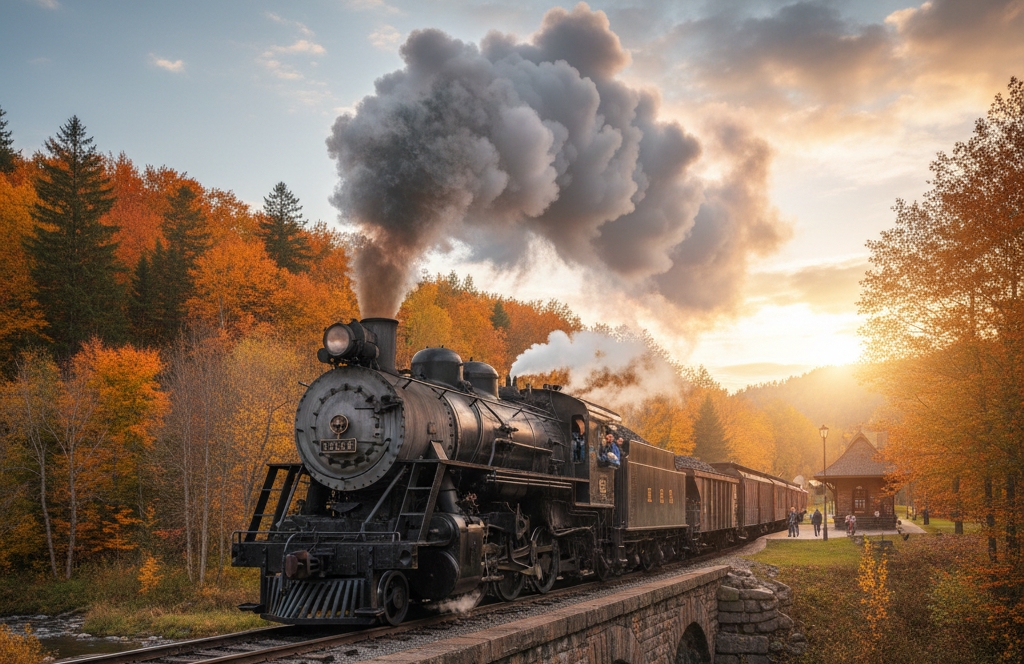
CLW's initial focus was exclusively on manufacturing steam locomotives. During this era, it produced both broad gauge and meter gauge steam locomotives. The final steam locomotive, aptly named 'ANTIM SITARA' (The Last Star), rolled out in 1972, marking the end of the steam engine production line at CLW after manufacturing 2,351 steam locomotives of 5 different types.
Diversification and Diesel Production
As the Indian Railways transitioned to electrification and diesel power, CLW adapted its production:
* Electric Locomotive Production: This began in 1961, with the first 1500 V DC locomotive, named 'LOKMANYA', commissioned by Prime Minister Jawaharlal Nehru. Production of 25 kV AC locomotives commenced in 1963 with the WAG-1 series, named 'BIDHAN'.
* Diesel Locomotive Production: Production of diesel-hydraulic locomotives (mainly for shunting and smaller lines) began in 1968. This was a short-lived line, with production discontinued in 1993–1994, after producing 842 diesel-hydraulic locomotives.
Modern Electric Powerhouse (1994–Present)
Focus on Electric Traction
After discontinuing all steam and diesel production, CLW fully focused its efforts on becoming a specialist manufacturer of high-power electric locomotives. This move cemented Chittaranjan's status as a hub for advanced railway technology.
Technological Advancements
CLW played a crucial role in introducing state-of-the-art technology to Indian Railways.
* It was one of the first units in the world to successfully manufacture the three-phase state-of-the-art GTO thyristor-controlled electric locomotive.
* In 1998, the first indigenous 6000 hp freight electric locomotive, the WAG-9 (christened 'NAVYUG'), was produced.
* CLW continues to manufacture high-power electric locomotives like the WAP-5, WAP-7, and WAG-9 series, making it one of the largest electric locomotive manufacturers in the world and a major contributor to India's railway electrification goals.
Summary of Milestones
| Year | Event | Significance |
|---|---|---|
| 1947 | Site approval by Railway Board. | Decision to establish the factory near Mihijam. |
| 1948 (April) | Workshop establishment begins. | Start of construction for the factory and township. |
| 1950 (Jan 26) | Production inaugurated (as Loco Building Works). | Coincides with India becoming a Republic; start of indigenous steam loco production. |
| 1950 (Nov 1) | Renaming to Chittaranjan Locomotive Works (CLW). | Named after Deshbandhu Chittaranjan Das; first steam locomotive is dedicated. |
| 1961 | Electric locomotive production begins. | Start of transition from steam to electric power. |
| 1972 | Steam locomotive production discontinued. | The last steam loco, 'ANTIM SITARA,' is rolled out. |
| 1993-94 | Diesel-hydraulic production discontinued. | CLW becomes a dedicated electric locomotive manufacturer. |
| 1998 | Production of indigenous 6000 hp WAG-9 loco ('NAVYUG'). | Entry into the league of global manufacturers of high-power three-phase electric locomotives. |
Chittaranjan today remains a classic example of a planned industrial township created by the Indian government in the post-independence era to drive national self-reliance, and its identity is inseparable from the history of Indian Railways' journey from steam to modern electric traction.