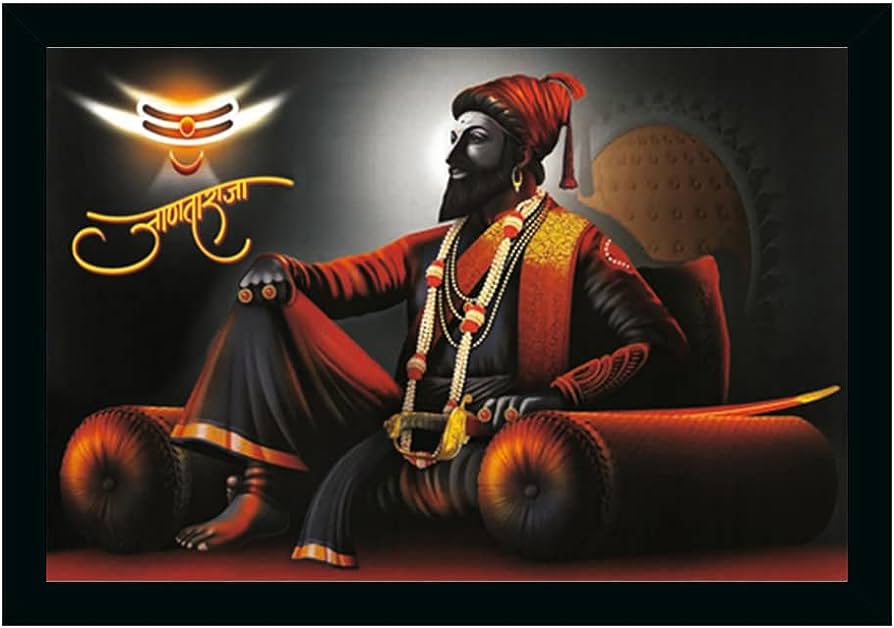
The year was 1656. Chhatrapati Shivaji, barely twenty-five, was beginning to carve out a name for himself in the rugged mountains of the Sahyadris. Yet, one region remained an impregnable thorn in his side: Javli, a vast, dense, and naturally fortified valley ruled by a powerful and arrogant chieftain named Chandra Rao More.
Chandra Rao More considered himself a king in his own right, holding the title of Raja and controlling a formidable army, including the renowned Hirdas Maval footmen. He looked upon the young Shivaji, who had only recently started defying the Sultanates, with utter disdain, often referring to him as a mere "upstart farmer's son." More’s strength was not just in his men, but in his strategic location—the mountainous paths leading to Javli were death traps for any attacking force.
Shivaji understood that without Javli, his dream of Hindavi Swarajya (self-rule) was incomplete, as the region was a vital link to the coast and held immense natural resources. However, a direct assault was impossible and would result in needless bloodshed.
Shivaji chose the path of the strategist, not the brute. He adopted a policy of slow, unrelenting political and psychological pressure, mixing flattery with veiled threat. He first sent a cordial but pointed letter to More:
“You are the Raja. We too are kings. We ought to act in concert. The time has come to unite for the freedom of the land. Send your commander to me so we may discuss an alliance.”
More, puffed up with pride, sent a scornful reply:
“You are but yesterday’s child. The jungle is your home, the goat-herds your companions. Who gave you the audacity to call yourself a Raja? Javli is too grand for your simple politics. Come yourself, and we shall see about this ‘alliance’.”
This was the opening Shivaji needed. He understood that More’s arrogance was his greatest weakness. Shivaji started sending his most charming and trusted emissaries, carrying not soldiers, but gifts: sweets, fine cloth, and pleasant messages. These emissaries were instructed to spend time in Javli, learning the layouts of the forts, the strength of the garrisons, and, most importantly, identifying the disaffected officers within More’s ranks.
For nearly a year, this deceptive friendship continued. Shivaji patiently built a network of intelligence and cultivated spies within the fort of Rairi (later Raigad), the heart of Javli. He knew the moment was right when he received word that More’s court had grown complacent, seeing Shivaji as merely a sycophant, not a threat.
Shivaji then launched his final, decisive maneuver. He announced his intention to visit Javli with a small party for a peace summit to finally cement their "brotherhood." More, eager to display his pomp and superiority, readily agreed.
However, Shivaji did not come alone. He positioned two small, highly trained contingents, under the command of Hambirrao Mohite and Kanhoji Jedhe, along concealed paths leading to Javli. His own accompanying party, seemingly just a handful of bodyguards, included some of his most trusted and ferocious lieutenants.
The meeting was a façade. At a pre-arranged signal, the few men who had entered Javli with Shivaji sprang into action. The unsuspecting guards were neutralized, and simultaneously, the two hidden contingents rushed in, using the insider knowledge gathered over the preceding year to bypass defenses.
Chandra Rao More was stunned. He had been so blinded by his own vanity that he failed to see the slow, steady shadow of the Lion creeping into his domain. He fled, but was eventually captured.
The conquest of Javli, achieved not through brute force but through strategic patience, meticulous intelligence gathering, and psychological warfare, was a pivotal moment. It gave Shivaji possession of Rairi Fort, which he later rebuilt and renamed Raigad—the capital of his Maratha Empire—a testament to the power of the mind over mere muscle.