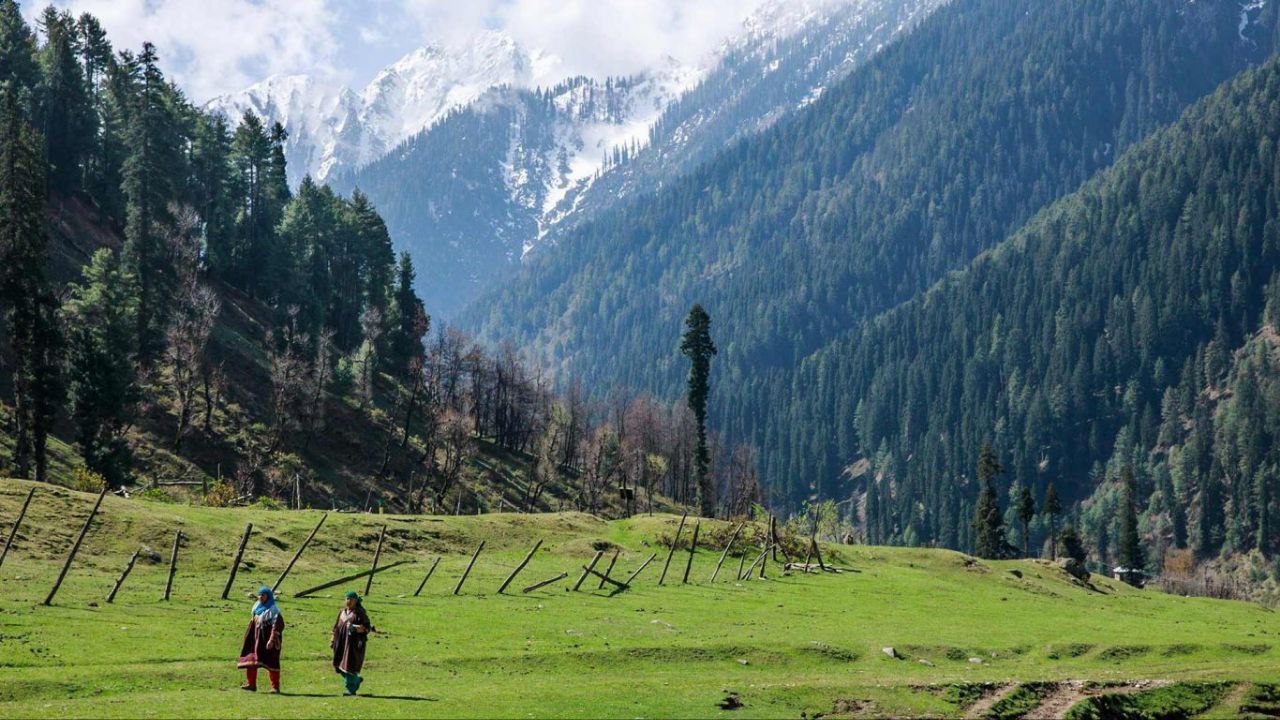
The administrative and constitutional status of Jammu and Kashmir has undergone significant changes over time, especially with its recent reorganization. Here are the details based on its current status as a Union Territory of India, along with historical context:
1. Establishment Year
* As a Princely State: The state of Jammu and Kashmir came into being as a single political and geographical entity following the Treaty of Amritsar in March 1846 between the British Government and Maharaja Gulab Singh.
* As a State of India (Post-Accession): Maharaja Hari Singh signed the Instrument of Accession to India on October 26/27, 1947. The state's Constitution was adopted on November 17, 1956, and came into force on January 26, 1957, declaring it an integral part of the Union of India.
* As a Union Territory (Present): The state was formally bifurcated and reorganized into two Union Territories—Jammu and Kashmir and Ladakh—on October 31, 2019, under the Jammu and Kashmir Reorganisation Act, 2019.
2. Borders (Present-day Union Territory of Jammu and Kashmir)
The Union Territory of Jammu and Kashmir borders:
* North and East: The Union Territory of Ladakh (also carved out of the former state).
* West and North: The Line of Control (LoC), which separates it from the Pakistani-administered territories of Azad Kashmir and Gilgit-Baltistan.
* South: The Indian states of Himachal Pradesh and Punjab.
3. Population
As per the 2011 Census of India (the last official census):
* Total Population: 12,267,013 (for the former state, which included the area now comprising the UT of Ladakh, though data for the present UT of J&K would be a subset).
* Current Projections: Population projections for the current UT of Jammu and Kashmir for the year 2025 range around 13.83 million to 16.0 million.
4. Languages Spoken
The region is multilingual.
* Official Languages: As per the J&K Official Languages Bill, 2020, the five official languages of the UT are:
* Kashmiri (Most widely spoken first language).
* Dogri
* Hindi
* Urdu (Previously the sole official language of the state since 1957).
* English
* Other Major Languages: Gojri and Pahari are also significant regional languages spoken by large communities.
5. Religion (in Present)
Based on the 2011 Census for the former state of Jammu and Kashmir (excluding the UT of Ladakh, which has a significant Buddhist population):
| Religion | Percentage (Approx.) |
|---|---|
| Islam | \approx 68.3\% |
| Hinduism | \approx 28.4\% |
| Sikhism | \approx 1.9\% |
| Others (Buddhism, Christianity, Jainism, etc.) | \approx 1.4\% |
The Kashmir Valley region is overwhelmingly Muslim majority, while the Jammu region has a Hindu majority.
6. Prime Ministers List
The designation of the head of government in the former state of Jammu and Kashmir was 'Prime Minister' from 1948 until 1965, when the title was changed to 'Chief Minister'.
List of Prime Ministers of the erstwhile state of Jammu and Kashmir (Post-Accession, before 1965):
* Sheikh Mohammad Abdullah (March 5, 1948 – August 8, 1953)
* Bakshi Ghulam Mohammad (August 9, 1953 – October 12, 1963)
* Khwaja Shamsuddin (October 12, 1963 – February 29, 1964)
* Ghulam Mohammad Sadiq (February 29, 1964 – March 30, 1965)
(Ghulam Mohammad Sadiq became the first Chief Minister from March 30, 1965, continuing his term).
(Note: There were Prime Ministers before 1947, appointed by the Maharaja of the Princely State, such as Raja Sir Daljit Singh, Raja Hari Singh, etc.)
7. President's Rule
The former state of Jammu and Kashmir had its own provision for Governor's Rule (under Article 92 of the J&K Constitution) before the imposition of President's Rule (under Article 356 of the Indian Constitution).
* Governor's Rule: The state was under Governor's Rule a total of 8 times between 1977 and 2018.
* President's Rule: President's Rule was imposed 3 times (the central rule moving from Governor's Rule to President's Rule after six months on two occasions) since 1977, with the latest being after the collapse of the government in 2018, which continued until the reorganization in 2019.
8. Famous Places and Products
Jammu and Kashmir is globally famous for its stunning natural beauty, spiritual sites, and high-quality handicrafts.
| Category | Famous Places (Worldwide/India) | Famous Products (Worldwide/India) |
|---|---|---|
| Nature/Scenery | Srinagar (Dal Lake, Mughal Gardens), Gulmarg (Skiing, Gulmarg Gondola), Pahalgam, Sonamarg, Patnitop. | Kashmiri Saffron (Pampore is a key location), Apples and other dry fruits (Walnuts, Almonds). |
| Culture/Handicrafts | N/A | Kashmiri Pashmina Shawls (famous for softness and warmth), Hand-knotted Kashmiri Carpets (intricate designs), Wood-carving (especially on Walnut wood), Paper Mâché. |
| Spiritual/Historic | Vaishno Devi Temple (Jammu), Amarnath Cave Temple, Hazratbal Shrine (Srinagar), Shankaracharya Temple (Srinagar). | Silk Textiles (e.g., chinon, crepe de chine), Silverware. |