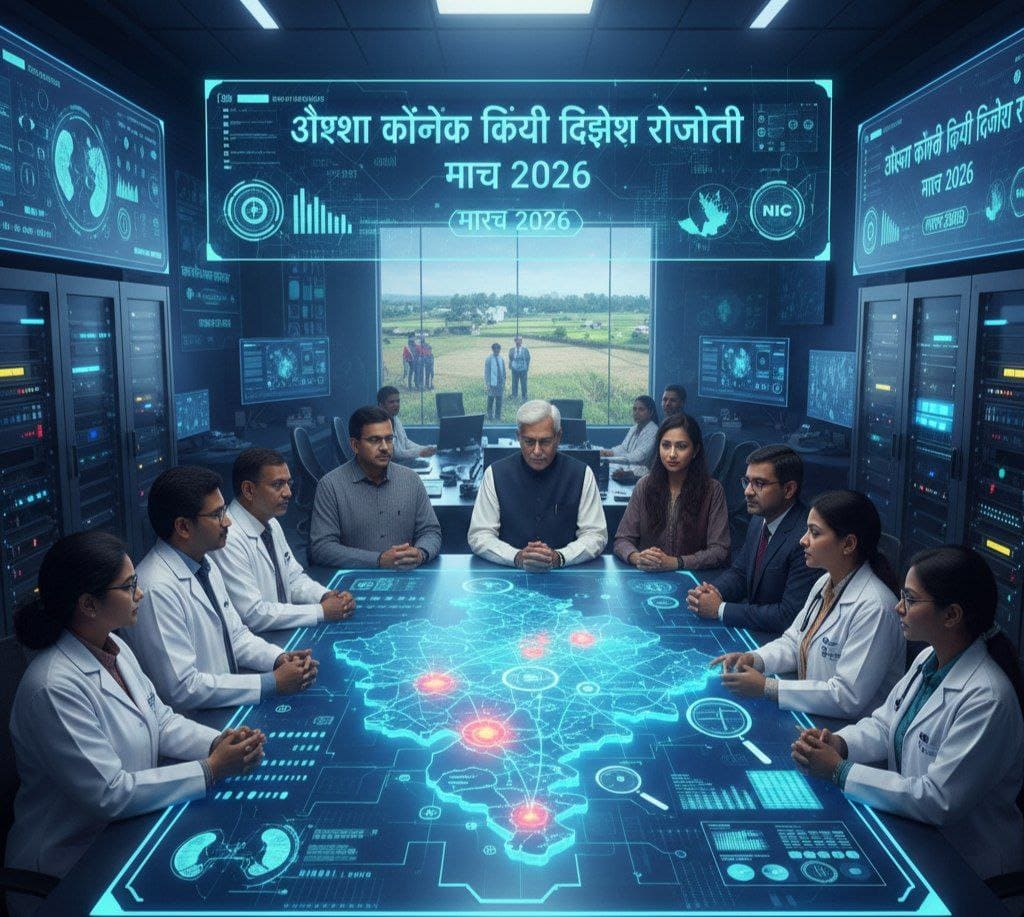
Odisha is set to become the first state in India to launch a comprehensive Chronic Kidney Disease (CKD) registry.
The state government plans to roll out this initiative by March 31, 2026, aiming to create a centralized database that tracks every stage of the disease, moving beyond just those currently undergoing dialysis.
The Silent Struggle: A Tale of Two Realities
In the quiet villages of Odisha, a silent predator has been moving through the fields. For years, the story of kidney disease in India has been like reading only the final chapter of a tragic book. We only saw the end: the crowded dialysis centers, the desperate search for transplants, and the "10%"—those whose kidneys had already failed.
The other 90%, the people in the early stages of the disease, remained invisible. They were farmers with a lingering fatigue or elders with unexplained swelling, unaware that their kidneys were slowly losing the battle.
Mapping the Unknown
The launch of the CKD registry marks a turning point in this story. No longer will doctors wait for the "end stage." Under this new initiative, a digital web is being woven from the smallest Primary Health Centres (PHCs) to the largest medical colleges. Every case, whether caused by the "usual suspects" like diabetes and hypertension or the mysterious CKDu (CKD of unknown origin), will be recorded.
> Why this matters: In Odisha alone, nearly 20,000 cases and over 4,700 deaths were reported in just three years. Experts believe the actual prevalence is around 14% among the population over 15 years old.
>
A Tech-Driven Shield
The National Informatics Centre (NIC) is currently crafting the software that will serve as the registry’s backbone. This isn't just a list of names; it is a strategic map. By tracking where the disease is most prevalent—especially the 40% of cases with unknown origins—the government can finally investigate environmental factors, such as water quality or soil contamination, in specific hotspots.
A 12-member state task force, led by the Chief Secretary and supported by experts from AIIMS and ICMR, is steering this mission. Their goal is simple but profound: to find the "invisible" patients while they can still be treated, ensuring that the story of their health has a much longer, brighter middle, rather than a premature end.