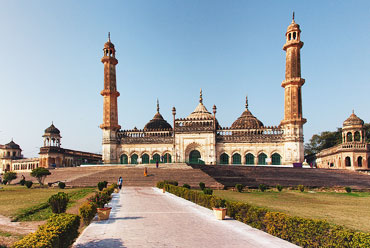
Kannauj, historically known as Kanyakubja (meaning "the city of the Hunchbacked Maiden"), has one of the most significant and ancient histories in northern India, often serving as a pivotal political and cultural capital for millennia.
Ancient and Classical Periods
Pre-History and Mythological Roots
* Antiquity: Archaeological discoveries indicate the region was inhabited by the Painted Grey Ware (c. 1200–600 BCE) and Northern Black Polished Ware (c. 700–200 BCE) cultures, highlighting its deep roots. Pre-historical weapons and tools from the Bronze Age have also been found.
* Vedic Period (Panchala Kingdom): During the Vedic period, Kannauj was the capital of the Panchala Kingdom. According to the Hindu epics like the Mahabharata and the Ramayana, it was the capital of King Amavasu, an ancestor of the sage Vishwamitra.
* Gupta Empire: Kannauj was an important town during the Gupta Empire (c. 320 to 550 CE), attracting scholars and intellectuals.
The Golden Age: Emperor Harsha
* Maukhari Dynasty (6th Century CE): Kannauj first gained imperial status under the Maukhari dynasty.
* Vardhana Dynasty (7th Century CE): Its peak importance began in the early 7th century CE when Emperor Harsha (Harshavardhana) shifted his capital from Thanesar to Kannauj.
* As Harsha's imperial capital, Kannauj flourished culturally and economically, becoming a massive hub of administration, religion, and trade, visited by the famous Chinese Buddhist traveler Xuanzang (Hieun Tsang).
* The city was situated on the vital Ganga trade route, connecting it to the Silk Road.
⚔️ Early Medieval Period: The Tripartite Struggle
Following the death of Harsha in 647 CE, Kannauj's strategic importance as the symbol of sovereignty over Northern India made it the focus of a prolonged power struggle between three major imperial dynasties.
| Dynasty | Reign and Role |
|---|---|
| Gurjara-Pratiharas (West/North) | They eventually secured control of Kannauj and made it the seat of their empire from the 8th to the 10th centuries, ruling a vast territory. |
| Palas (East) | Rulers from the Bengal region who often contested control over the city. |
| Rashtrakutas (South) | Dynasty from the Deccan region that frequently raided and temporarily occupied the city. |
This conflict, which lasted for nearly two centuries, is known as the Tripartite Struggle.
???? Later Medieval Period: Decline and Invasions
The Gahadavala Dynasty
* In the 11th and 12th centuries, Kannauj recovered some of its importance under the rule of the Gahadavala dynasty.
* Under King Govindachandra, the city reached "unprecedented glory," and was considered the wealthiest city in early Medieval India.
* The last great independent Hindu ruler of the city was Jaichandra (Jayachandra), whose conflict with Prithviraj III (the Chauhan ruler of Delhi) is famously recounted in folklore, involving the legendary elopement of Jaichandra's daughter, Samyogita.
Foreign Invasions and Sultanate Rule
* Mahmud of Ghazni (1018 CE): The city was razed by Mahmud of Ghazni, which severely weakened its infrastructure and political status.
* Plunder and Destruction (1194 CE): The city was plundered again in 1194 CE by Muhammad Ghori's forces, leading to its near-total destruction and permanent loss of imperial prominence.
* Delhi Sultanate: The region was absorbed by the Delhi Sultanate, after which it became a regional town rather than an imperial capital.
???? Mughal and Later Periods
* Mughal Empire: Kannauj remained a regionally relevant town under the Mughals.
* It was briefly lost to the Afghans in 1527 but was later restored to the Mughal Empire.
* Emperor Akbar made it the headquarters of a Sirkar (administrative unit).
* The attar (natural perfume) tradition, for which Kannauj is famous today, is closely associated with this period, with Mughal queen Noor Jahan credited with the discovery and development of rose attar.
* British Rule: The city became part of the North-Western Provinces under British colonial rule.
* Post-Independence: Kannauj was integrated into the Indian state of Uttar Pradesh. It was carved out as a separate district from Farrukhabad in 1997.
Despite losing its political status, Kannauj has maintained a strong cultural identity, particularly as the "Perfume Capital of India" (Itra Nagari), a legacy that continues to this day.