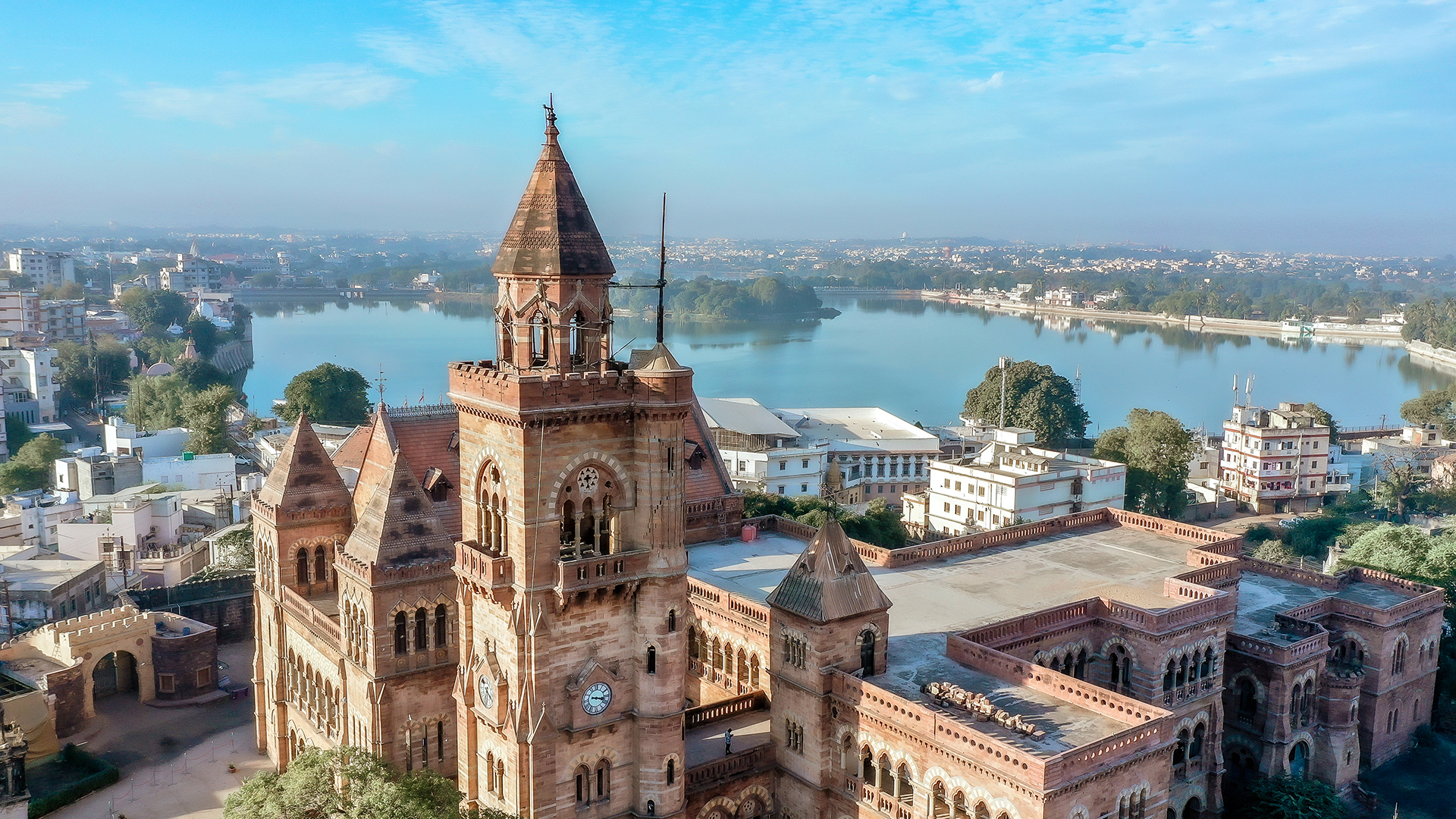
The Prag Mahal, located next to the Aina Mahal in Bhuj, Kutch, Gujarat, India, is a 19th-century palace with a rich history and unique architecture.
History and Commissioning
* Commissioned by: The palace is named after Rao Pragmalji II (a progressive ruler from the Jadeja dynasty), who commissioned its construction.
* Start and End of Construction: Construction began in 1865 and was completed in 1879, taking over a decade.
* The Cost: The construction of the palace cost an enormous sum of 3.1 million rupees (or 31 Lakhs rupees) at the time. Another source cites the cost as 19 Lakh Koris.
* Completion: Rao Pragmalji II reigned from 1860 until his death in 1875 and did not live to see the palace's completion. It was finished during the regency of his son, Khengarji III.
* Purpose: The palace was built to reflect European styles, showcasing the growing influence of Western design, and was a symbol of Rao Pragmalji II's vision for Kutch's development and modernization.
Architectural Style and Construction
* Architect: The palace was designed by British architect Colonel Henry St Clair Wilkins (also referred to as Colonel Henry Saint Wilkins or Colon Wilkins).
* Architectural Style: The design is a fascinating blend, often described as Italian Gothic or Neo-Gothic style. It is also described as having elements of Romanesque architecture or a Romanesque architecture twist on the Indo-Saracenic Revival style.
* Materials: Construction utilized exquisite materials, including Italian marble and sandstone from Rajasthan.
* Artisan Collaboration: The creation was a significant artistic collaboration, involving skilled Italian artisans and the legendary craftsmanship of the local Kutchi builder community, known as the Mistris of Kutch or the gaidhars of Kutch. The palace artisans' wages were notably paid in gold coins.
Notable Features of the Palace
* Clock Tower: The palace is instantly recognizable by its majestic 45-foot (or 45-meter) high bell tower with a clock, which offers a panoramic view of the entire Bhuj city.
* Durbar Hall: The grand Durbar Hall is a major feature, adorned with classical statues and dazzling chandeliers.
* Interior Details: The palace's halls feature Corinthian pillars and intricate Jali work (a traditionally Indian style of stone work) that depicts European-style flora and fauna. The main hall also contains a collection of taxidermy.
* Courtyard: There is a small Hindu temple with nicely carved stonework located in the courtyard behind the palace.
Later History and Restoration
* Damage: The palace was severely damaged by the 2001 Gujarat earthquake.
* Burglary: In 2006, the palace was burgled, resulting in the theft of antiques worth millions of rupees and damage to other items.
* Restoration: The palace and the tower were later repaired. Amitabh Bachchan took a personal interest in the restoration of the palace. The Darbar Hall was renovated by Maharao Pragmalji-III at a personal cost of Rs 5 crore.
* Current Status: The palace is now open to visitors, who can enter the main halls and ascend the clock tower. It is maintained and showcased by the Maharao Shree Madansinhji Saheb Kutch Benevolent Trust, Bhuj.